

blog

May 12, 2025
Coffee and Menopause: Does It Affect Weight, Sleep and Hot Flushes?
If you’re going through perimenopause or menopause, you may be wondering whether your daily coffee is affecting your sleep, contributing to hot flushes, making it harder to manage your weight or influencing your cholesterol levels.
With so much conflicting advice about coffee and menopause, it’s understandable to wonder whether you should be cutting back.
Coffee isn’t an established cause of menopause weight gain, although caffeine may indirectly make weight management more difficult if it disrupts sleep and affects appetite regulation.
For many women, there’s no need to give up coffee altogether. Coffee contains compounds associated with several health benefits, but how much you drink, when you drink it and your individual sensitivity to caffeine can all make a difference.
In this article, we’ll explore what the research tells us about coffee and menopause, including its relationship with weight, sleep, hot flushes and cholesterol, and how to decide what works best for you.

Do you need to cut back on coffee during menopause?
If you’ve found yourself searching online for “is coffee bad for menopause?”, the reassuring answer is that most women don’t need to stop drinking coffee simply because they’re going through perimenopause or menopause.
Coffee contains polyphenols and other compounds associated with potential health benefits. However, caffeine affects people differently. Some women can enjoy several cups without noticing any problems, while others find that even relatively small amounts interfere with their sleep or leave them feeling jittery.
Rather than automatically giving up coffee, the more useful question is whether the amount you drink, when you drink it and how you prepare it are working well for you.
These factors can influence how coffee affects your sleep and symptoms, while your brewing method can also make a difference to cholesterol levels. We’ll explore each of these in more detail below.
Coffee and menopause weight gain: does caffeine affect your weight?
Coffee and caffeine aren’t established causes of weight gain during menopause. However, for some women, caffeine may indirectly make weight management more difficult if it disrupts sleep and affects appetite regulation.
You may also have heard that drinking coffee raises cortisol and encourages fat storage around your middle. But does the research support this?
What about caffeine and cortisol?
Caffeine can temporarily increase cortisol levels, particularly in people who don’t regularly consume it. However, this is a normal physiological response and doesn’t mean that drinking coffee causes persistently raised cortisol levels or increased abdominal fat.
Changes in oestrogen levels, ageing, muscle mass and lifestyle factors, such as reduced physical activity and increased sedentary time, are much more relevant to the changes in body fat distribution that many women experience during midlife.
If you’d like to understand these changes in more detail, I’ve explored why weight gain happens during menopause and what you can do about it in a separate article.
Could coffee affect your weight indirectly?
Potentially, and this is where your individual response to caffeine matters.
If caffeine disrupts your sleep, it may indirectly make weight management more difficult. Poor sleep can influence appetite regulation, hunger and food choices, particularly when you’re already dealing with menopause-related sleep disturbances.
If you’ve noticed changes in your hunger during midlife, you may also find my article on hunger in menopause and why it happens helpful.
It’s also worth considering what goes into your coffee. Sugar, syrups, cream and larger milk-based drinks can add a significant amount of energy, particularly if you’re having several each day.
If sleep is a particular concern, we’ll look more closely at caffeine’s effects on sleep and how to manage your intake in the next section.
The takeaway: You don’t need to avoid coffee because you’re concerned about menopause weight gain. But if it’s affecting your sleep, or your usual coffee choices are contributing more energy than you realise, making a few adjustments may be helpful.
Coffee and menopause sleep problems: can caffeine make them worse?
If you’re struggling to fall asleep, waking frequently during the night or feeling unrefreshed in the morning, your coffee habits may be worth looking at.
Sleep difficulties are common during perimenopause and menopause, often influenced by hormonal changes, night sweats, stress and other factors. Caffeine doesn’t necessarily cause these problems, but it can make sleep more difficult for some women.
How does caffeine affect sleep?
Caffeine works by blocking the effects of adenosine, a chemical that builds up in the brain throughout the day and helps us feel sleepy.
A systematic review and meta-analysis of caffeine and sleep found that caffeine can make it harder to fall asleep, reduce total sleep time and affect sleep quality. Importantly, you may not always notice these effects. You might feel that your afternoon coffee doesn’t interfere with your sleep, even when it’s having an impact.
Why does the timing of your coffee matter?
Caffeine stays in your system longer than many people realise.
Its half-life is typically around five hours, meaning that approximately half the caffeine from a cup of coffee may still be in your body five hours later.
For example, if you drink coffee at 5 pm, around half of that caffeine could still be in your system at 10 pm, and some may remain into the early hours of the morning.

This lingering caffeine can make it harder to fall asleep, stay asleep or get enough restorative sleep, even if you don’t feel particularly alert or jittery.
If you’re experiencing sleep difficulties, try avoiding caffeine for around 6–8 hours before bedtime as a starting point. Some women may benefit from an earlier cut-off, particularly if they’re sensitive to caffeine.
Try this for a week or two and see whether you notice any improvement. You could also switch your afternoon coffee to decaf rather than giving up the pleasure of enjoying coffee altogether.
Why are some women more sensitive to caffeine?
Not everyone processes caffeine at the same rate. Some people break it down relatively quickly, while others metabolise it more slowly, meaning caffeine stays in their system for longer.
Genetics plays an important role, particularly the CYP1A2 gene. Medications, smoking status and other factors can also affect how quickly caffeine is cleared from the body.
Although sleep difficulties, jitteriness and anxiety are common during menopause, they aren’t necessarily caused by caffeine. Equally, caffeine may be contributing to symptoms that are already present.
The takeaway: If sleep is a struggle, caffeine is one factor worth exploring. Small changes to how much you drink and when you drink it may help, without needing to give up coffee altogether.
Coffee and menopause symptoms: can caffeine make hot flushes or anxiety worse?
Caffeine is often suggested as a possible trigger for hot flushes and night sweats, but the research is mixed. Some women notice a connection between drinking coffee and their symptoms, while others experience no noticeable effect.
Does caffeine trigger hot flushes?
A study involving 1,806 women found an association between caffeine consumption and more troublesome hot flushes or night sweats in postmenopausal women. However, this type of observational research doesn’t establish that caffeine causes these symptoms, and there’s limited evidence that avoiding it consistently improves them.
Individual experiences do vary. Some women find that hot drinks or caffeine seem to trigger their symptoms, while others can enjoy coffee without any noticeable effect.
If you suspect coffee is contributing to your hot flushes, try reducing your caffeine intake or switching to decaf for a couple of weeks. Decaf still contains a small amount of caffeine, but considerably less than regular coffee, so it can be a useful alternative.
You could also experiment with having your coffee cooler to see whether it’s the temperature rather than the caffeine that’s making a difference.
What about anxiety and feeling jittery?
Caffeine stimulates the central nervous system and, particularly at higher doses, can cause feelings of restlessness, nervousness or a racing heart.
These sensations can overlap with symptoms some women experience during perimenopause and menopause, making it difficult to know what’s contributing.
If you notice that you feel more anxious or jittery after coffee, try reducing the amount you drink or switching to a lower-caffeine option.
The takeaway: There’s no strong evidence that all women need to avoid caffeine to manage hot flushes. But if you’ve noticed a connection between coffee and your symptoms, experimenting with the amount, temperature or type of coffee you drink may help you find what works best for you.
Does coffee raise cholesterol?
Cholesterol levels often rise during and after menopause, partly because of changes in oestrogen levels. If you’re trying to manage your cholesterol, you may be wondering whether your daily coffee makes a difference.
The answer depends largely on how your coffee is prepared.
Why does the brewing method matter?
Coffee naturally contains two compounds called cafestol and kahweol. Cafestol in particular has been shown to increase LDL (often called ‘bad’) cholesterol.
These compounds are found in the oils of coffee beans, but the amount that ends up in your cup varies considerably depending on how the coffee is brewed.
Paper filters trap much of these oils, whereas brewing methods that don’t use a paper filter allow more of them through. This difference is supported by research examining the effects of coffee preparation on blood cholesterol.
Which types of coffee are better for cholesterol?
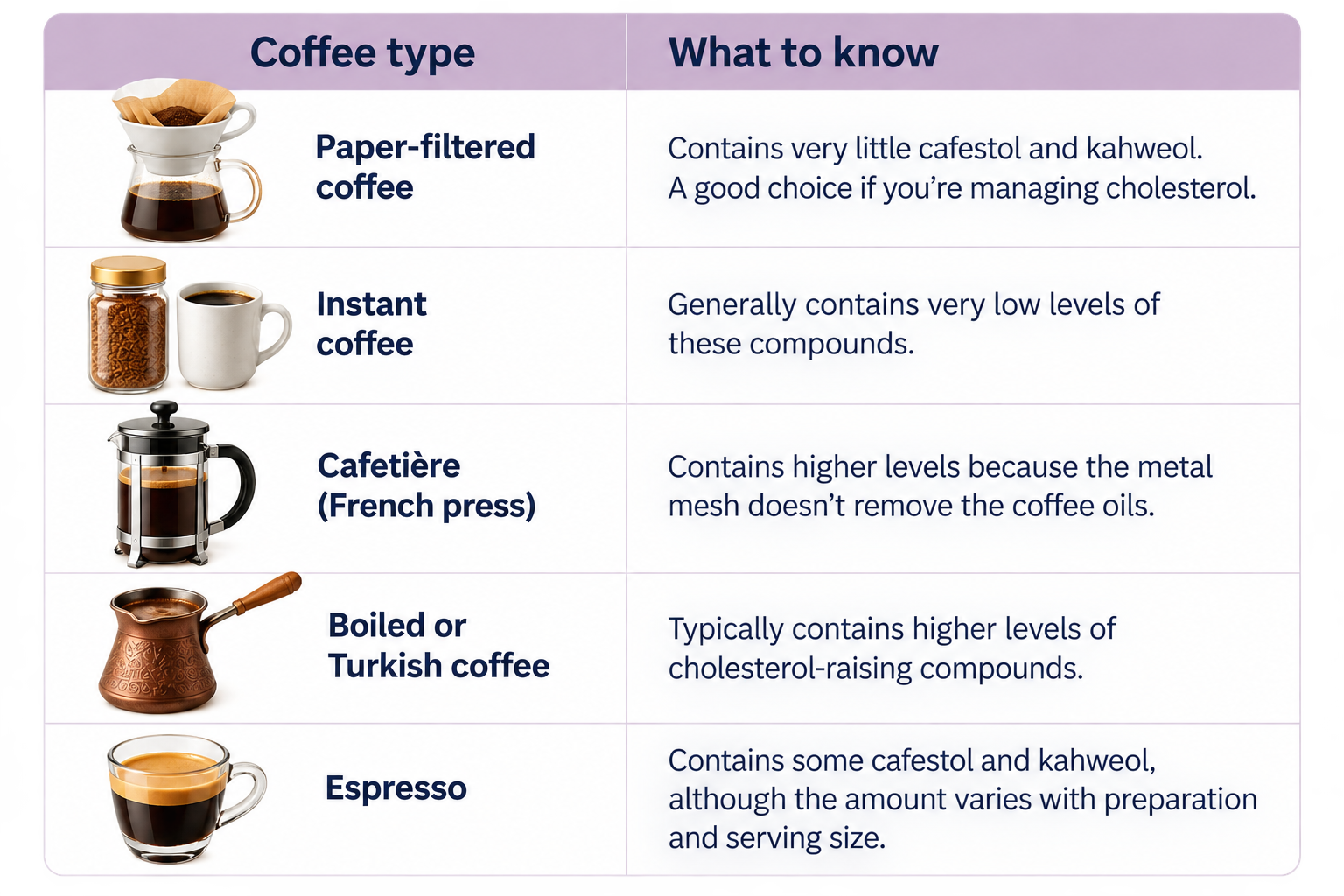
It’s worth remembering that coffee is just one of several factors that can influence cholesterol levels. Changes in oestrogen during menopause, genetics and your overall diet and lifestyle are generally more important than your coffee habits.
If you only drink unfiltered coffee occasionally, it’s less likely to have a meaningful impact on your cholesterol than drinking several cups every day.
The takeaway: When it comes to cholesterol, the brewing method matters more than whether your coffee contains caffeine. If you’re managing raised cholesterol, switching from unfiltered coffee to paper-filtered or instant coffee may be a worthwhile adjustment.
Coffee and menopause: what are the potential health benefits?
When we think about coffee, we tend to focus on caffeine and how it affects our sleep, energy and menopause symptoms. But caffeine is only one part of the picture.
Coffee contains hundreds of biologically active compounds, including polyphenols, which have antioxidant and anti-inflammatory properties. Research suggests that coffee consumption may be associated with several long-term health benefits, including a lower risk of type 2 diabetes, certain cardiovascular diseases and premature death.
This is particularly relevant during midlife, when cardiovascular risk increases and some women experience a decline in insulin sensitivity, alongside changes in cholesterol levels and body fat distribution.
Much of the research looks at coffee consumption in adults generally, rather than women specifically during menopause, so it’s important to keep that distinction in mind.
Coffee and type 2 diabetes
Large observational studies and meta-analyses consistently find that people who regularly drink coffee tend to have a lower risk of developing type 2 diabetes.
Interestingly, this association has been observed with both regular and decaffeinated coffee, suggesting that compounds other than caffeine may contribute to the relationship.
However, these studies don’t prove that coffee prevents diabetes. Your overall dietary pattern, physical activity, sleep and weight management remain important.
What does this mean in practice? Coffee, including decaf, can be part of a dietary pattern that supports metabolic health. But there’s no need to drink more coffee in the hope of gaining additional health benefits, particularly if caffeine disrupts your sleep. You can also get polyphenols from a wide variety of plant foods.

Coffee, heart health and longevity
Research has also found associations between moderate coffee consumption and a lower risk of certain cardiovascular diseases and premature death. A large umbrella review published in the BMJ brought together evidence on coffee consumption and a wide range of health outcomes.
Some large studies suggest that people drinking around two to four cups of coffee daily have better long-term health outcomes than those who drink none, although the findings vary between studies.
These associations don’t establish that coffee itself is responsible. People who drink different amounts of coffee may also differ in other aspects of their health and lifestyle.
And as we’ve already discussed, the way coffee is prepared matters. Unfiltered coffee can raise LDL cholesterol, so the potential benefits of coffee don’t mean that every brewing method has the same effect on heart health.
The takeaway: Coffee contains compounds associated with several potential health benefits, including a lower risk of type 2 diabetes and some cardiovascular outcomes. But you don’t need to start drinking coffee to improve your health, and there’s no reason to force yourself to drink more if it affects your sleep or makes you feel unwell.
How much coffee is right for you during menopause?
There’s no single amount of coffee that’s right for every woman during menopause. Some women can enjoy a number of cups a day without noticing any problems, while others find that even relatively small amounts affect their sleep or leave them feeling jittery. The most useful guide is how coffee affects your own sleep and symptoms.
If coffee is interfering with your sleep, increasing feelings of anxiety or making hot flushes more troublesome, you may benefit from drinking less or changing when you have it.
Is there a recommended daily caffeine limit?
According to the European Food Safety Authority’s guidance on caffeine, for most healthy, non-pregnant adults, up to 400 mg of caffeine per day is generally considered an amount that isn’t associated with safety concerns.
However, this isn’t a recommended intake or a target to aim for. It’s also important to distinguish between an amount considered generally safe and one that supports good sleep. Even considerably smaller amounts of caffeine can interfere with sleep in some people.
The two to four cups of coffee often discussed in studies of long-term health benefits aren’t a recommendation to drink that amount either.
How much caffeine is in your favourite drinks?
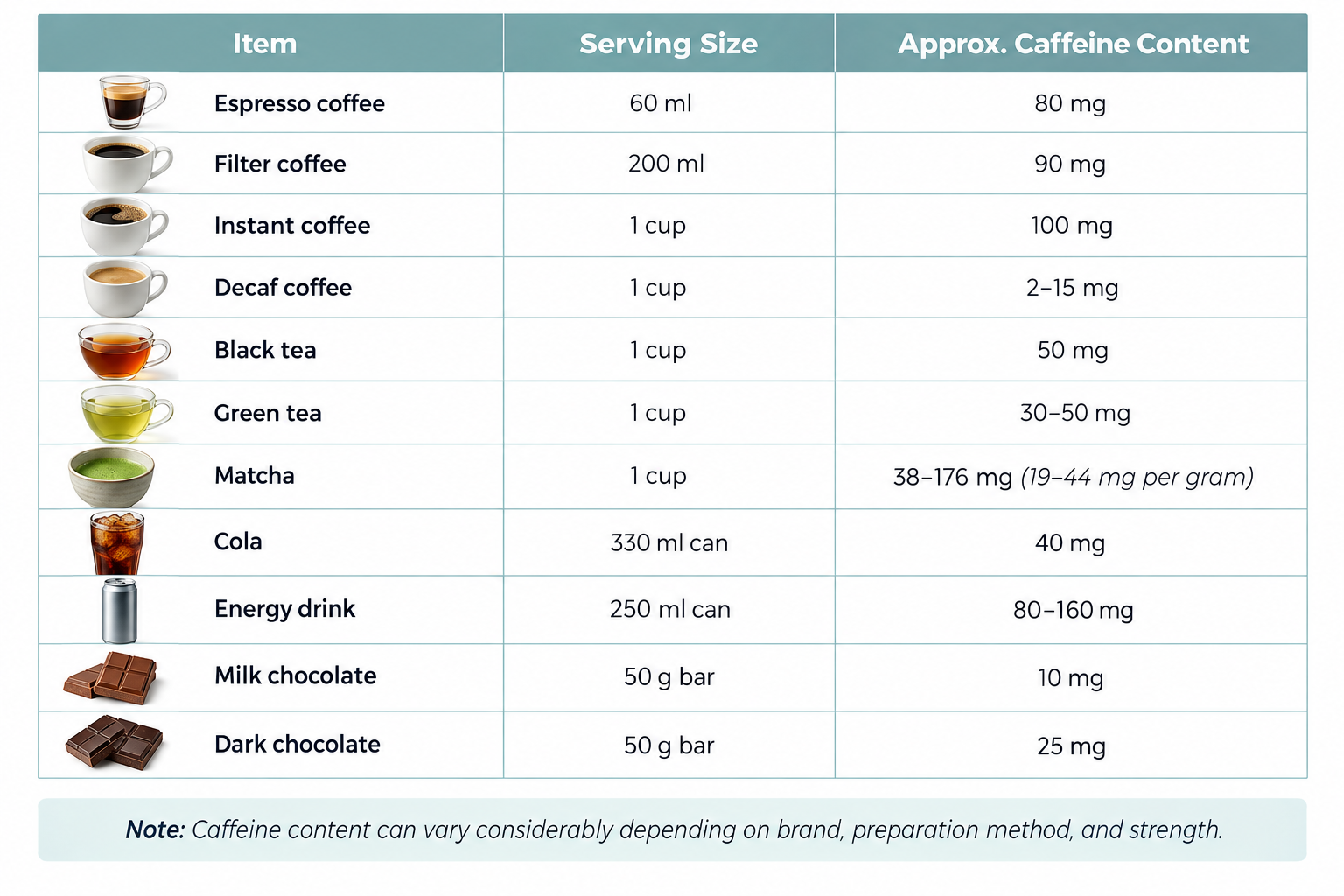
The takeaway: There’s no need to aim for a particular number of cups. Understanding your caffeine intake and considering how it affects your sleep and symptoms can help you decide whether any adjustments would be worthwhile.
Coffee and menopause: finding what works for you
There’s no need to give up coffee simply because you’re going through perimenopause or menopause. For many women, coffee can remain an enjoyable part of their daily routine.
Whether you need to make any changes depends on how coffee affects your symptoms and sleep, how much you drink and how you prepare it.
A few things worth thinking about:
- If you’re sleeping well and feeling comfortable with your coffee intake, there’s probably no reason to change it.
- If sleep is a struggle, try having your last caffeinated drink earlier in the day or switching to decaf in the afternoon.
- If you notice hot flushes, jitteriness or anxiety after coffee, experiment with reducing caffeine or changing the temperature of your drink.
- If you’re managing raised LDL cholesterol, consider whether switching from unfiltered to paper-filtered or instant coffee could be helpful.
- If you’re concerned about weight gain, remember that coffee itself isn’t an established cause of menopause weight gain. Sleep, appetite regulation and your overall dietary pattern are more relevant.
You don’t need to make all these changes at once. Start with whatever feels most relevant to you, see whether it makes a difference and adjust from there.
Ultimately, coffee is just one small part of the wider picture of managing your health and wellbeing during menopause. If you’re finding that your usual approaches to weight management are no longer working, you might also find my article on why trying harder often backfires during menopause helpful.
Looking for support with weight and metabolic health during menopause?
If you’re struggling with changes in your weight, appetite or energy during menopause, I can help you make sense of what’s happening and find a practical way forward, without another restrictive diet.
[Book a free 20-minute discovery call]
Not ready to talk yet? [Start with my free quiz.]