
blog

June 9, 2025
Sugar Cravings in Menopause: Why They Happen & What Helps
You finish dinner feeling comfortably full, but an hour later you’re back in the kitchen looking for chocolate or biscuits. Sound familiar? Sugar cravings in menopause can feel particularly frustrating, especially when you’re trying to make changes to your food choices.
Perhaps it’s the 3–4 pm slump when you find yourself looking for something sweet, or the biscuits that seem to go hand in hand with your afternoon cup of tea. Maybe it’s when you finally sit down after a busy day and think, “I just want something nice.”
And if you’re also noticing changes in your weight, these familiar eating patterns can make things even more difficult.
You might have tried cutting back on sugar, finding healthier alternatives or setting stricter rules for yourself, only to find that the cravings keep returning.
But managing cravings isn’t simply a matter of willpower. Changes in sleep and mood during perimenopause and menopause may contribute, alongside physical hunger, stress and the ways we’ve learned to use food in different situations.
In this article, we’ll explore why cravings may feel stronger during menopause, how they can become part of everyday routines, and practical ways to respond to them — both in the moment and over time.
Does Menopause Cause Sugar Cravings?
If cravings for sweet foods have become stronger or harder to manage during perimenopause or menopause, it’s understandable to wonder whether changing hormones are responsible.
Although there isn’t strong evidence that falling oestrogen directly causes sugar cravings, menopause-related changes may contribute indirectly.
Several factors can play a part:
Disrupted sleep. Night sweats and frequent waking can leave us feeling exhausted. Poor sleep can affect appetite regulation and may make sweet, highly rewarding foods more appealing.
Physical hunger. Eating too little or having meals that aren’t sufficiently satisfying may leave us feeling hungry and more drawn towards sweet foods.
Stress and mood. Changes in mood during menopause, alongside the pressures of midlife, may increase the appeal of familiar foods that provide comfort, pleasure or relief.
These factors can overlap. A night of disrupted sleep, for example, might leave us feeling tired, less able to cope with everyday pressures and with less energy to prepare satisfying meals. Foods that offer comfort or reward may also become more appealing.
If cravings are accompanied by noticeably stronger physical hunger, I explore this further in Perimenopause Hunger: Why You Feel Hungrier & What Helps.
If weight gain is also a concern, my article Menopause Weight Gain: Why It Happens and What to Do explores the wider changes that can contribute during midlife.
But hormones and physical hunger aren’t the whole story. Cravings can also become closely connected to everyday routines, situations and emotions — often without us consciously noticing.
Why Do I Crave Something Sweet at Certain Times of Day?
Cravings often follow familiar patterns. It might be chocolate after work, biscuits with an afternoon cup of tea, or something sweet when finally sitting down in the evening.
There’s nothing wrong with any of these. But when they become regular habits that make it harder to achieve what we want, it can be useful to understand what’s driving them.
These patterns aren’t always driven by hunger, although hunger and habit can overlap.
Over time, particular situations can become associated with thoughts, feelings and the urge to eat.
For example, finishing a demanding day might bring thoughts such as “I’ve had enough today” or “I deserve a treat.” Reaching for chocolate can become a familiar way of finding some comfort or relief.
Sometimes the craving is less about the food itself and more about what we’re hoping eating will do for us.
This can be particularly relevant in midlife, when work, family responsibilities and other demands leave little time for ourselves. That moment when the day’s responsibilities are finally over may be the first real opportunity to pause.
Food can become a quick and familiar way of finding rest, comfort, relaxation or reward.
And the more often these patterns are repeated, the more automatic they can become. Eventually, finishing work, putting the kettle on or settling onto the sofa may be enough to prompt a craving, even when there’s little physical hunger.
Recognising these connections can help explain why cravings arise and why simply trying to resist them doesn’t always work.
Why Willpower, Restriction and Healthier Swaps Don’t Always Work
When sugar cravings become frustrating, a common response is to try to take more control — perhaps by cutting out chocolate, avoiding biscuits during the week or replacing sweet treats with healthier alternatives.
These approaches can be helpful, but they don’t always address what’s driving the craving.
Relying on willpower
Willpower can help with making choices in the moment, but it’s harder to rely on when we’re tired, stressed or distracted.
And when eating has become a familiar way of finding comfort, relaxation or reward, simply trying to resist the food doesn’t address the need behind it.
Setting stricter food rules
Rules such as “No chocolate during the week” may seem like a sensible way to regain control.
But for some people, making certain foods off-limits can increase thoughts about them and make cravings harder to manage.
If cutting back also means eating too little overall, physical hunger may make cravings even stronger.
Making healthier swaps
Choosing fruit instead of chocolate or a lower-sugar alternative to biscuits can sometimes be useful, particularly when managing overall energy intake.
But when the craving is for a particular taste, texture or experience, a substitute may not feel satisfying. It’s possible to eat the alternative and still want the original food afterwards.
The point isn’t that willpower, reducing sugar or making swaps never work.
It’s that the most helpful approach depends on what’s driving the craving.
Understanding that difference creates more options than relying on willpower alone.
I explore this further in Weight Gain in Menopause: Why Trying Harder Often Backfires, including why greater restriction isn’t always the most helpful response when weight management becomes difficult.
Finding it difficult to manage cravings alongside changes in your weight?
When cravings keep returning despite your best efforts, it can be difficult to know what to change. I help women understand the factors influencing their eating and develop practical strategies that fit their lives.
If you’d like to explore whether personalised support could help, you’re welcome to book a free 20-minute discovery call.
What Can You Do When a Sugar Craving Strikes?
When a craving feels particularly strong, it can be difficult to think beyond either eating something sweet or trying hard to resist it.
Rather than immediately deciding what to do, it can help to slow things down enough to notice what’s happening.
Three questions can provide a useful starting point.
1. What’s happening right now?
Start by noticing what was happening just before the craving appeared.
Perhaps it’s been a long time since the last meal. Or maybe something happened — an unexpected demand, a difficult conversation or a stressful journey home.
Notice any thoughts that followed. Was it “I’ve had enough today”, “I deserve something nice” or “I just need a break”?
Sometimes the first thing we notice is the urge to eat, rather than the situation or feeling that preceded it.
The aim isn’t to judge the craving, but to become more aware of what might be contributing to it.
2. What am I hoping eating will give me?
Sometimes the answer is straightforward: something sweet sounds enjoyable.
At other times, food may promise comfort, relief, stimulation, reward or a few minutes away from everything else.
It can help to consider what the feeling behind the craving might be telling us.
For example, feeling overwhelmed might signal that there are more demands than we feel able to manage. Boredom might indicate a need for stimulation or interest, while loneliness may point towards a need for connection.
There’s no need to find a complicated explanation for every craving. Sometimes the answer is quite simple.
3. What would help right now?
The next step is to consider what might genuinely help.
If there’s physical hunger, something satisfying to eat may be the answer.
If there’s a need for rest, comfort or connection, perhaps there’s another way to meet some of that need.
And sometimes the choice will be to enjoy the chocolate.
The aim isn’t to resist every craving, but to create more opportunities to decide how to respond.
A real-life example: The 9 pm chocolate craving
Imagine it’s 9 pm. The working day is over, dinner is finished and the household jobs are finally done. There’s a chance to sit down, but instead of feeling relaxed, there’s a sense of exhaustion and a desire for something enjoyable.
Chocolate suddenly sounds very appealing.
The illustration below shows how a familiar situation, together with our thoughts and feelings, can lead to an urge to eat — and how eating may promise something beyond the food itself.
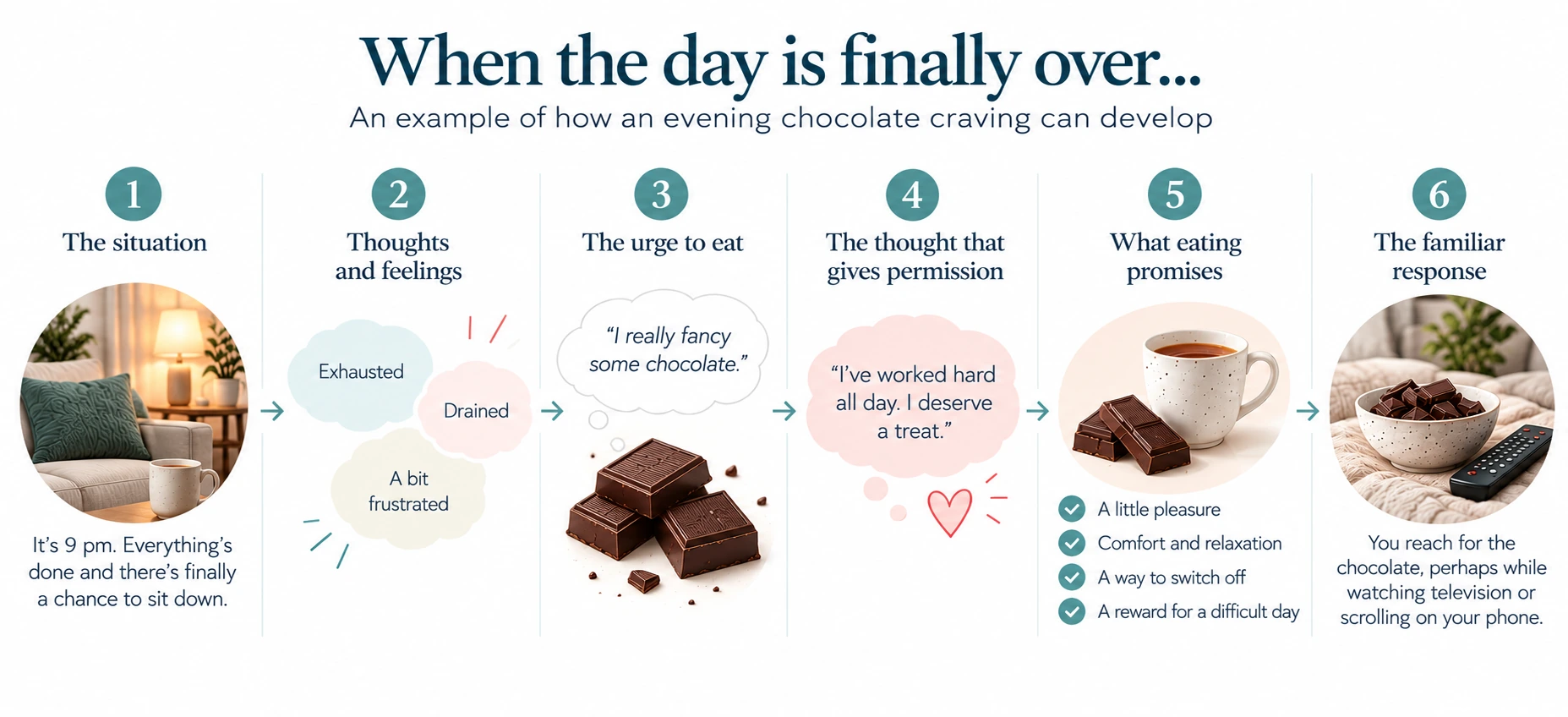
The important question is what happens next. Sometimes eating provides exactly the enjoyment or comfort we wanted. At other times, the pleasure is brief and the underlying tiredness or frustration remains.
That difference is worth noticing, not as a reason to criticise the decision, but because it can help us understand whether eating is meeting the need we hoped it would.
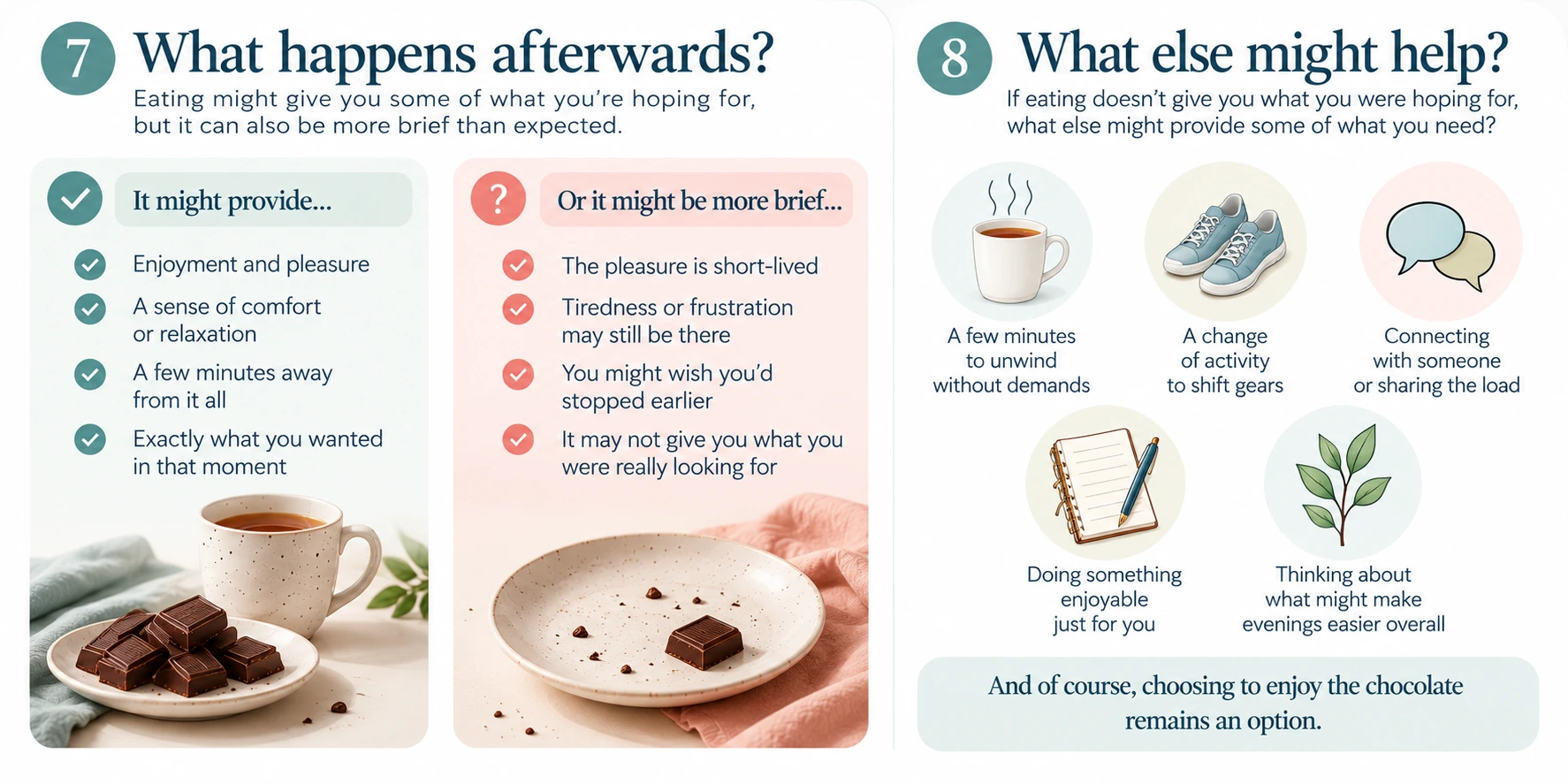
The purpose of exploring this pattern isn’t to suggest that eating chocolate is wrong. It’s to recognise what eating may be doing for us and whether it’s providing what we hoped for.
Sometimes it will. At other times, understanding the need behind the craving may reveal other possibilities.
And if the choice is to eat?
Recognising what’s driving a craving doesn’t mean the decision has to be not to eat.
Sometimes enjoying something sweet is exactly what we want. And when that’s the choice, making eating a more deliberate experience can help us get greater enjoyment and satisfaction from it.
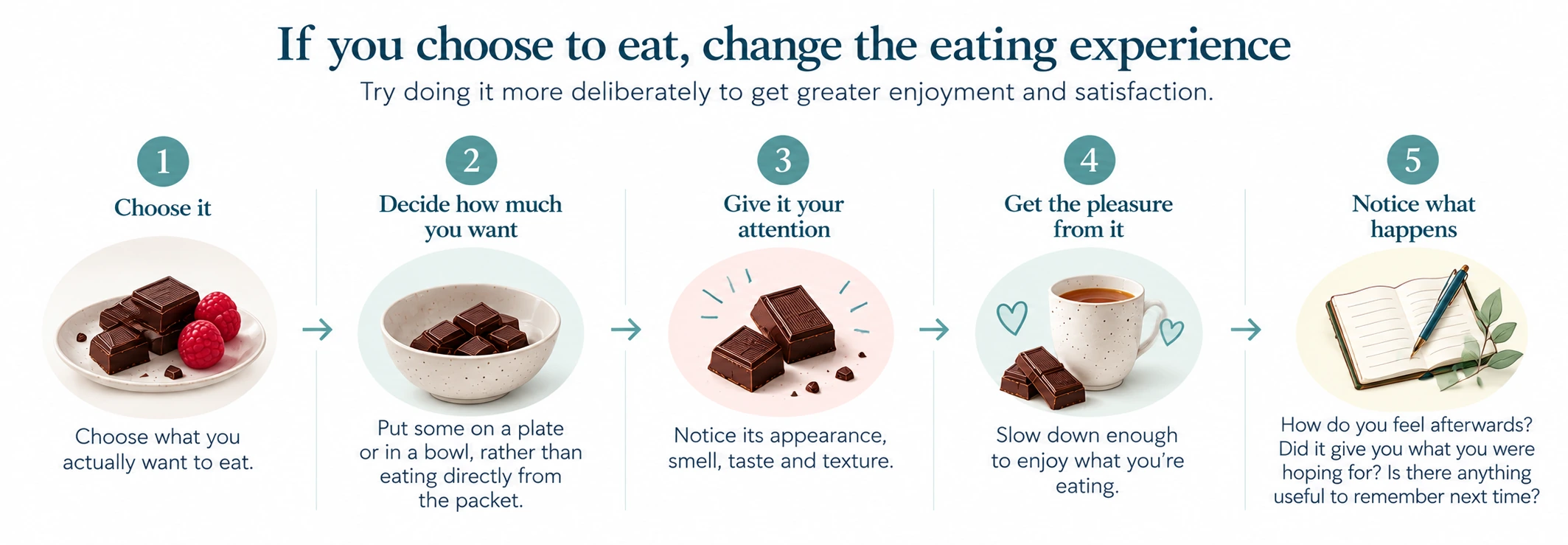
This isn’t about eating perfectly or introducing another set of rules. It’s about making eating less automatic, allowing ourselves to enjoy food and becoming more aware of what genuinely helps.
How to Make Sugar Cravings Easier to Manage Over Time
Managing cravings isn’t just about what happens in the moment. Small changes to eating patterns, daily routines and the demands we place on ourselves can help make cravings less frequent or easier to manage.
1. Make meals more satisfying
When meals don’t provide enough energy or leave us feeling hungry soon afterwards, cravings can be harder to manage.
Including protein and fibre at meals can help us feel comfortably satisfied for longer.
For example, a light salad at lunchtime might be more satisfying with the addition of chicken, eggs, tofu or beans, alongside some wholegrains.
The aim isn’t to eat perfectly, but to have meals that provide enough nourishment and help prevent excessive hunger later in the day.
2. Address sleep disruption and ongoing tiredness
Poor sleep can affect appetite regulation and make highly rewarding foods more appealing.
During perimenopause and menopause, night sweats, frequent waking and other symptoms may make getting enough sleep particularly difficult.
Where menopause symptoms are affecting sleep, seeking appropriate support from a GP can be an important step. The NICE menopause guideline outlines approaches to managing menopause-related symptoms, including sleep difficulties.
It’s also worth considering whether there are opportunities to reduce some of the demands contributing to ongoing exhaustion.
3. Build more ways of meeting what you need
Food can provide comfort, pleasure, stimulation, relief or a welcome break from responsibilities. There’s nothing wrong with that.
But when eating has become one of the main ways of meeting these needs, it can be helpful to develop some other options alongside it.
For example, if eating has become a familiar way of unwinding at the end of the day, it might help to protect a little time that’s genuinely free from responsibilities.
If boredom is a frequent trigger, the question isn’t simply “What can I do instead of eating?” but “What might give me some of the interest or stimulation I’m looking for?”
That could mean changing activities, getting outside, connecting with someone or making time for something genuinely enjoyable.
The alternatives don’t have to work perfectly or remove the feeling altogether. They only need to provide something useful at that moment.
The aim isn’t to take food away, but to have more than one way of responding to what we need.
4. Make helpful choices easier
Even when we know what we’d like to do differently, busy days can make it difficult to follow through.
Planning a few easy meals, keeping satisfying snacks available or making small changes to familiar routines can reduce the need to rely on willpower.
For example, if arriving home hungry regularly leads to grazing while preparing dinner, having a satisfying afternoon snack or an easy evening meal planned may help.
Small changes to our surroundings and routines can make it easier to follow through with our intentions without constantly having to think about them.
The most effective changes are often those that fit comfortably into everyday life, rather than requiring constant effort.
The aim isn’t to eliminate sugar cravings or stop enjoying sweet foods. It’s to understand which factors are contributing most and make changes that support both enjoyment of food and longer-term weight-management goals.
Finding a More Manageable Way Forward
Sugar cravings during perimenopause and menopause can be frustrating, particularly when weight management already feels more difficult than it used to.
There’s rarely one simple explanation. Physical hunger, disrupted sleep, stress, familiar routines and the different roles food plays in our lives can all contribute.
Understanding these patterns is a useful starting point, but knowing what might help doesn’t necessarily make it easy to put into practice.
Would personalised support help?
If sugar cravings are making weight management more difficult, particularly when you’re already trying to make healthy choices, it can be hard to know where to start.
As a Registered Dietitian specialising in menopause and weight management, I help women understand the eating patterns and other factors influencing their weight, and make practical, sustainable changes without rigid food rules or unnecessary restriction.
A free 20-minute discovery call is an opportunity to talk through what’s been happening, what you’ve already tried and what you’d like to achieve. We can then explore whether working together would be helpful and what that might look like.